Digital Marketing vs Performance Marketing: Simple Guide for Beginners
09-03-2026
Performance Marketing vs Digital Marketing: A Beginner-Friendly Guide
What is Digital Marketing?
Digital marketing means promoting a product, service, or brand using the internet and digital platforms. Instead of traditional methods like newspapers or flyers, businesses use websites, social media, and search engines to reach their audience online.
The main goal of digital marketing is to increase brand awareness, website traffic, engagement, and leads. Businesses use different online channels to connect with people where they spend most of their time on the internet.
Digital marketing helps companies build long-term relationships with customers. It focuses on creating value through useful information, helpful content, and consistent online presence.
Flow of Digital Marketing – How It Works
The first step in digital marketing is setting a clear goal. Businesses may want to increase website traffic, brand awareness, followers, or customer engagement.
The next step is identifying the target audience, such as customers, business users, or niche audiences. Understanding the audience helps marketers choose the right platforms and messaging.
After identifying the audience, businesses choose digital platforms like websites, blogs, Facebook, Instagram, LinkedIn, or YouTube to promote their content.
Finally, marketers track performance using metrics such as website visits, engagement, and new visitors. These insights help improve future marketing strategies.
Digital Marketing Channels: SEO, Social Media, and Content Marketing
Search Engine Optimization (SEO) helps websites appear higher on search engines like Google. When a website ranks higher, it can attract organic traffic without paying for ads.
Social media marketing allows businesses to connect with their audience on platforms like Instagram, Facebook, and LinkedIn. It helps build community, engagement, and brand visibility.
Content marketing focuses on creating helpful materials such as guides, blogs, case studies, and tutorials. Good content builds trust and authority with the audience over time.
What is Performance Marketing?
Performance marketing is a type of digital marketing where businesses pay only when a specific result happens. These results can include clicks, leads, sales, or app downloads.
Unlike traditional advertising, performance marketing focuses on measurable outcomes and clear return on investment. This makes it easier for businesses to track whether their marketing efforts are successful.
Performance marketing is often used when companies want fast and measurable results. It relies heavily on paid campaigns and data analysis.
Flow of Performance Marketing – How It Works
Performance marketing starts with defining a specific conversion goal, such as generating leads, sales, or email sign-ups. Having a clear objective helps guide the campaign strategy.
Next, marketers run paid advertisements on platforms like Google Ads or social media platforms. These ads target specific users based on interests, behavior, or demographics.
Users who click on the ads are usually sent to a landing page designed to convert visitors into customers. The landing page encourages actions such as signing up, downloading, or buying.
Marketers then measure results using metrics such as click-through rate, conversions, and bounce rate. These insights help optimize campaigns for better performance.
Performance Marketing Channels
Paid search advertising is one of the most common performance marketing strategies. Businesses bid on keywords so their ads appear when users search for specific terms.
Paid social media advertising allows companies to promote products on platforms like Facebook, Instagram, and LinkedIn. These platforms provide advanced targeting options to reach the right audience.
Performance marketing also uses affiliate marketing and conversion-focused content such as landing pages, product demos, and testimonials. These elements help turn visitors into paying customers.
Understanding the Difference Between Digital Marketing and Performance Marketing
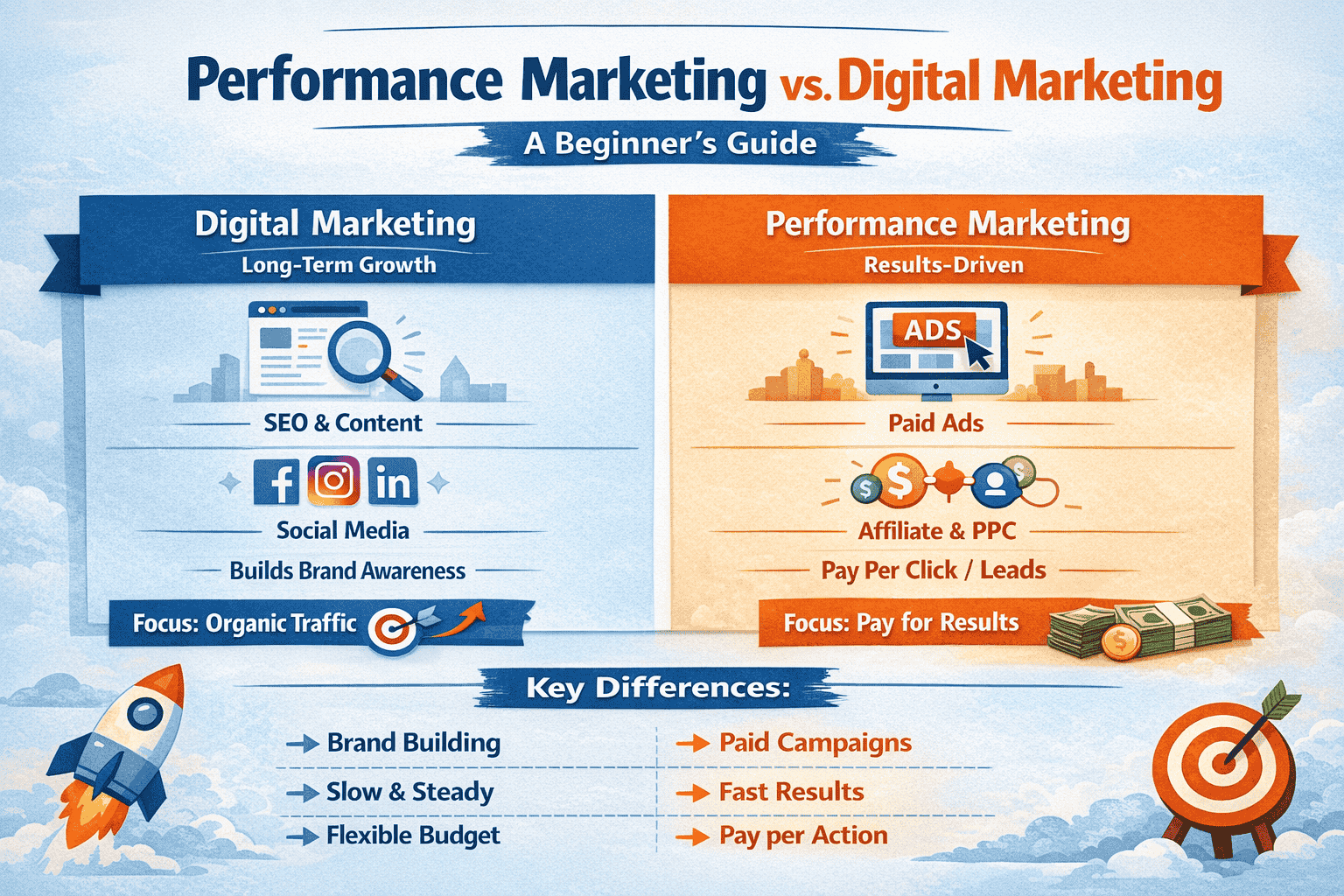
Digital marketing focuses on building a strong online presence and long-term brand growth. It includes strategies such as SEO, social media marketing, and content creation.
Performance marketing, on the other hand, focuses on immediate results and measurable actions like clicks, leads, and sales. Businesses usually pay only when these actions occur.
In simple terms, digital marketing builds awareness and trust, while performance marketing drives measurable results quickly. Both strategies work best when used together.
Flow of Performance Mrketing in Practice
A typical performance marketing campaign starts with running targeted ads online. These ads attract users who are already interested in a product or service.
Once users click the ad, they are directed to a conversion-focused landing page designed to encourage action. The goal is to convert visitors into leads or customers.
Marketers then analyze campaign data and continuously optimize ads, targeting, and budget. This process helps improve performance and increase return on investment.
Pros and Cons of Digital and Performance Marketing
One advantage of digital marketing is that it helps businesses build long-term brand visibility and trust. Strategies like SEO and content marketing can generate traffic for a long time.
Performance marketing provides fast and measurable results, which makes it ideal for businesses that want immediate leads or sales. Campaigns can be adjusted quickly based on performance data.
However, digital marketing can take time before showing strong results. Performance marketing also requires advertising budget and constant optimization.
Basic Maintenance and Common Beginner Mistakes
One common beginner mistake is not setting clear marketing goals. Without clear goals, it becomes difficult to measure whether a campaign is successful.
Another mistake is targeting the wrong audience. Marketing messages should focus on a specific group rather than trying to reach everyone.
Beginners also often forget to track important metrics like traffic, engagement, and conversions. Without data, it is hard to improve marketing performance.
Some marketers rely only on paid advertising and ignore strategies like SEO and content marketing. A balanced approach usually produces better long-term results.
Conclusion
Both digital marketing and performance marketing play important roles in online business growth. Digital marketing focuses on building brand awareness, trust, and long-term visibility.
Performance marketing focuses on measurable actions such as clicks, leads, and sales. It helps businesses achieve faster results through targeted campaigns.
For beginners, the best strategy is to combine content marketing, SEO, social media marketing, and performance advertising. This balanced approach helps create sustainable growth and stronger marketing results.
Related Services
Want to put these ideas into practice? Talk to Fruxinfo Ahmedabad about: